BY BOYU PUMP Flood Control & Industrial Pumps Request a Quote
Tracked drainage robot pumping out a flooded street
Home / Applications / Flood control
Application 01

Flood control & emergency drainage

When water is rising, the constraint is rarely the pump curve. It is access, the first hour, and whether someone has to stand in the water to make it work. This is the line built around those three problems.

What makes this hard

Three constraints, every time.

Access

A trailer cannot reach a flooded underpass, a basement ramp or a stairwell. The equipment has to travel to the water on its own, over kerbs, steps and soft ground.

The first hour

Priming, foot valves and long suction runs eat the hour that matters most. Self-priming and vacuum-assisted units start from a dry line and pump immediately.

Keeping crews out

Moving water, live electrical equipment and traffic. Remote-controlled and self-powered units let the crew work from dry ground instead of standing in the flow.

In the field

Equipment working, not on a stand.
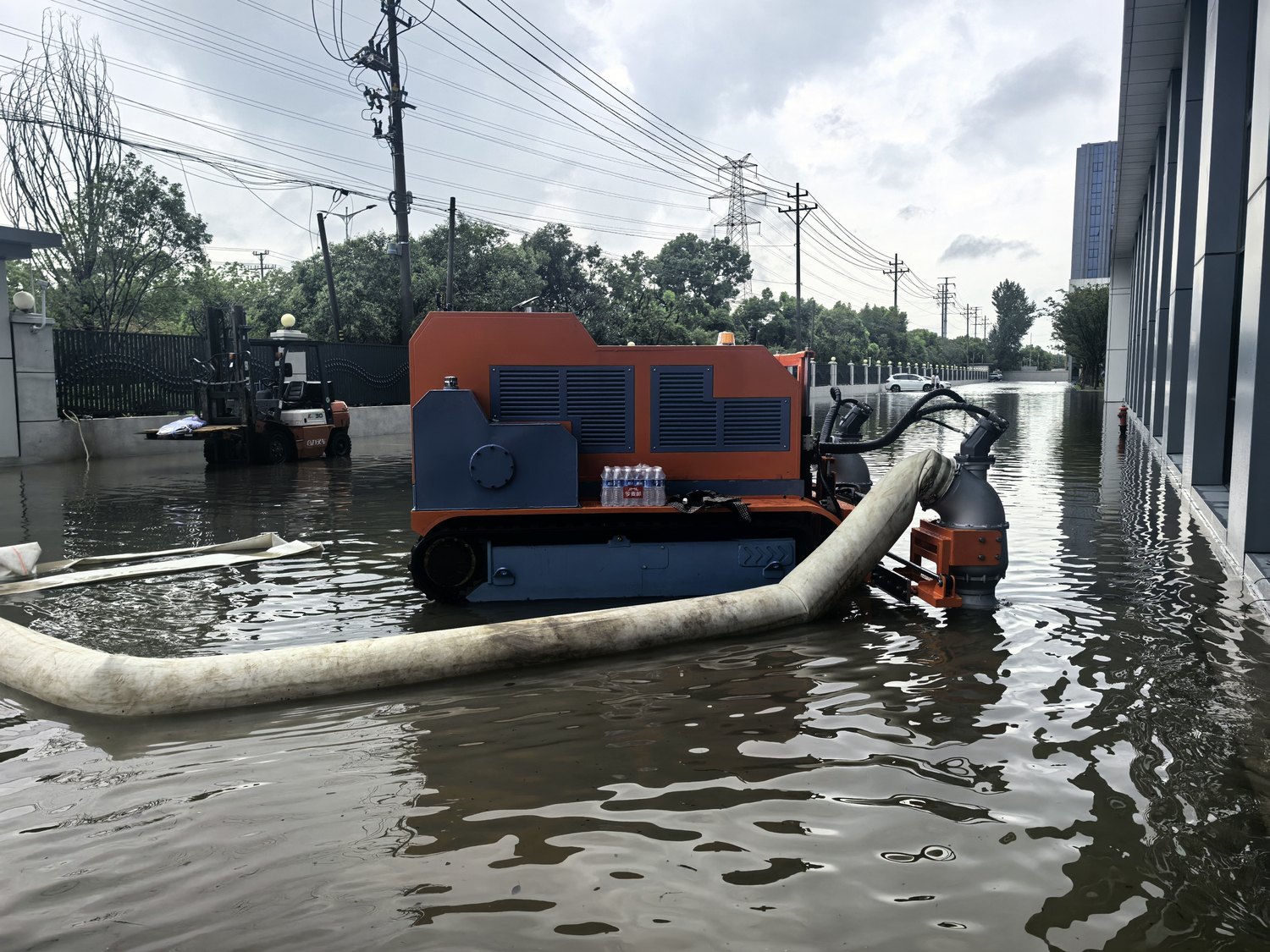
Tracked drainage robot submerged in flood water on a city street
Tracked unit pumping directly from a flooded roadway.
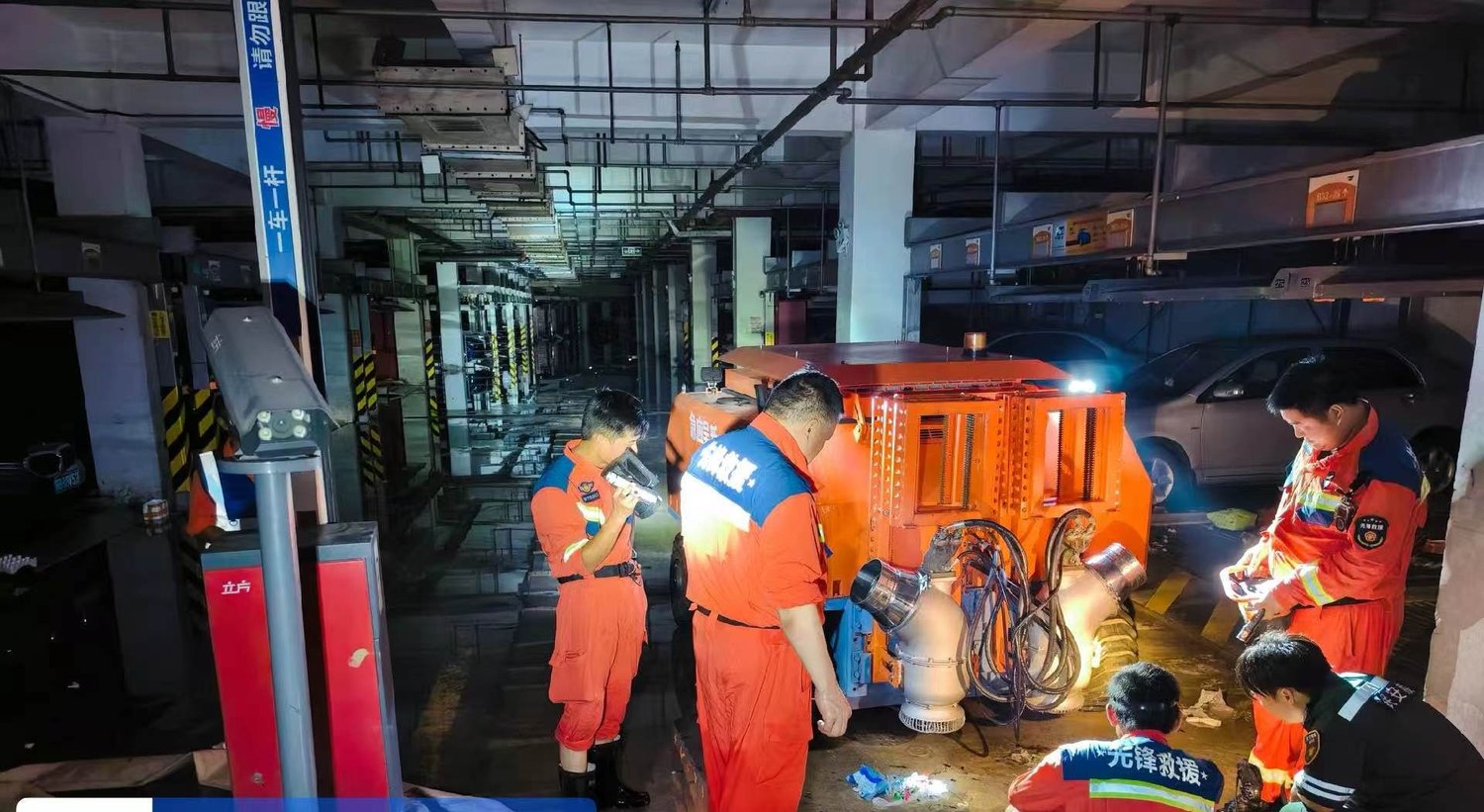
Drainage equipment deployed inside a flooded underground car park
Underground car park — confined access, no vehicle route in.
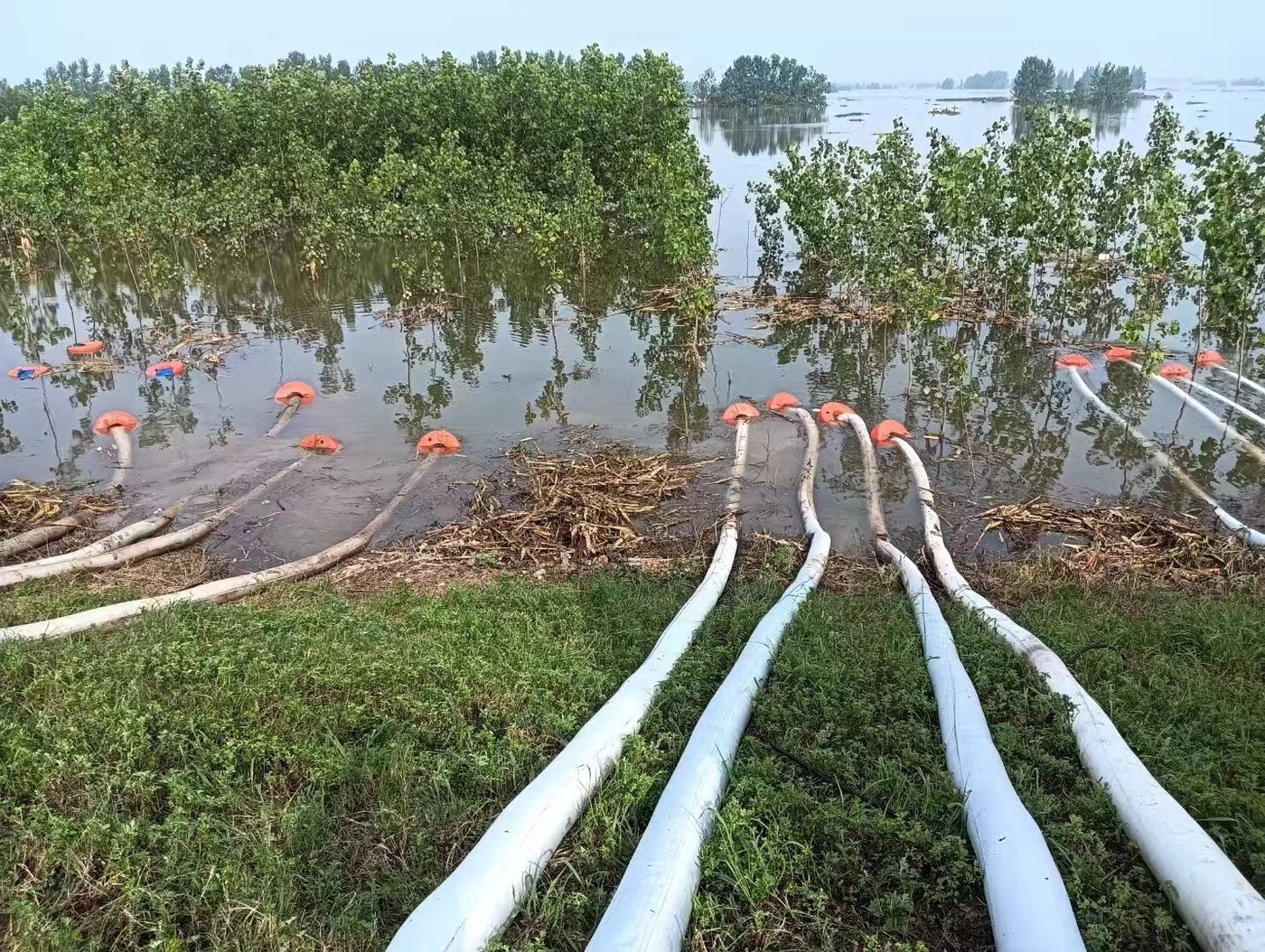
Floating pump sets distributed across a flooded wetland with discharge lines back to the bank
Floating sets spread across a flooded wetland — discharge lines run back to the bank.
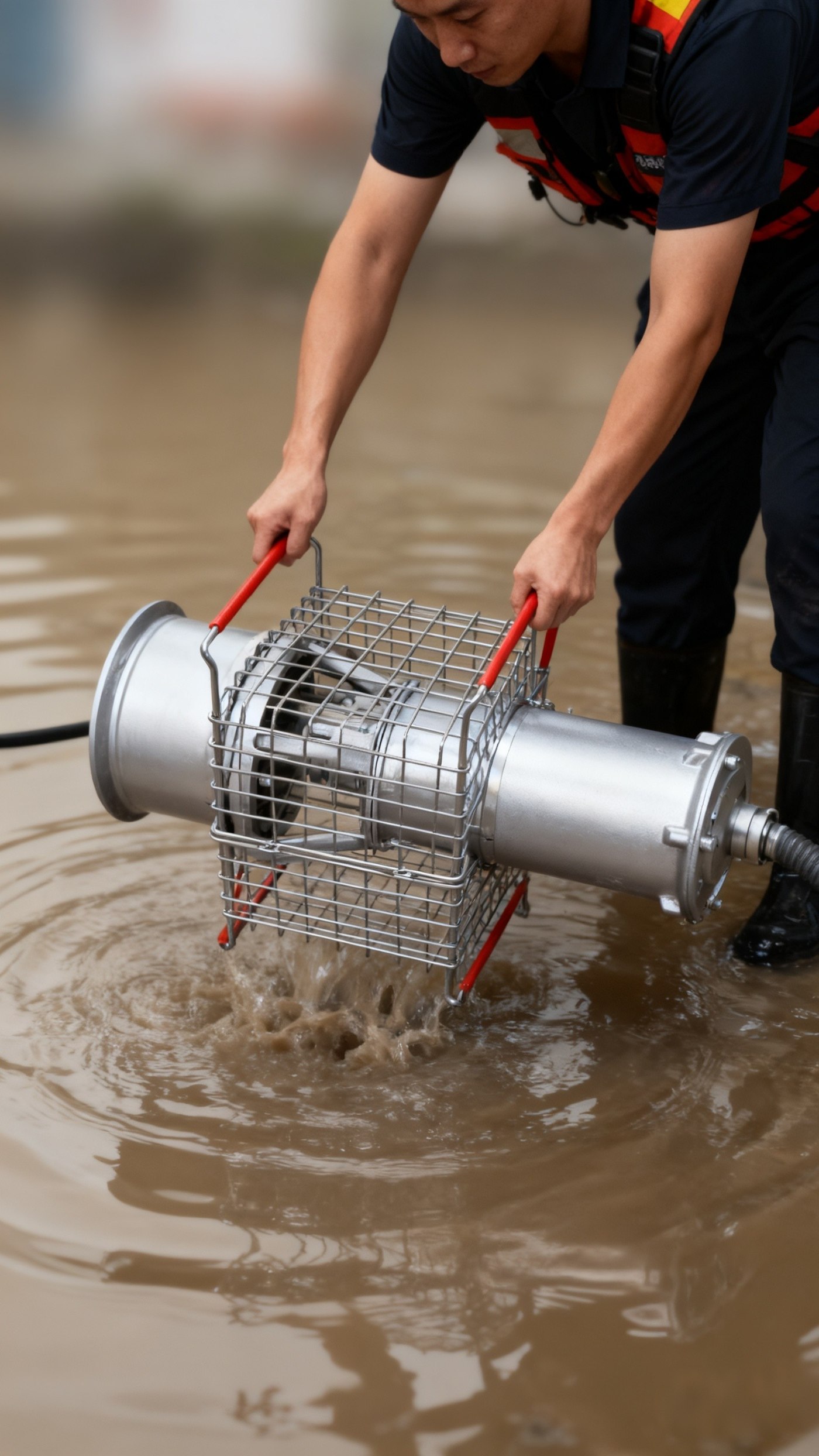
Portable submersible pump with strainer cage being lowered into flood water
Portable submersible set carried into position — the strainer cage protects the impeller.
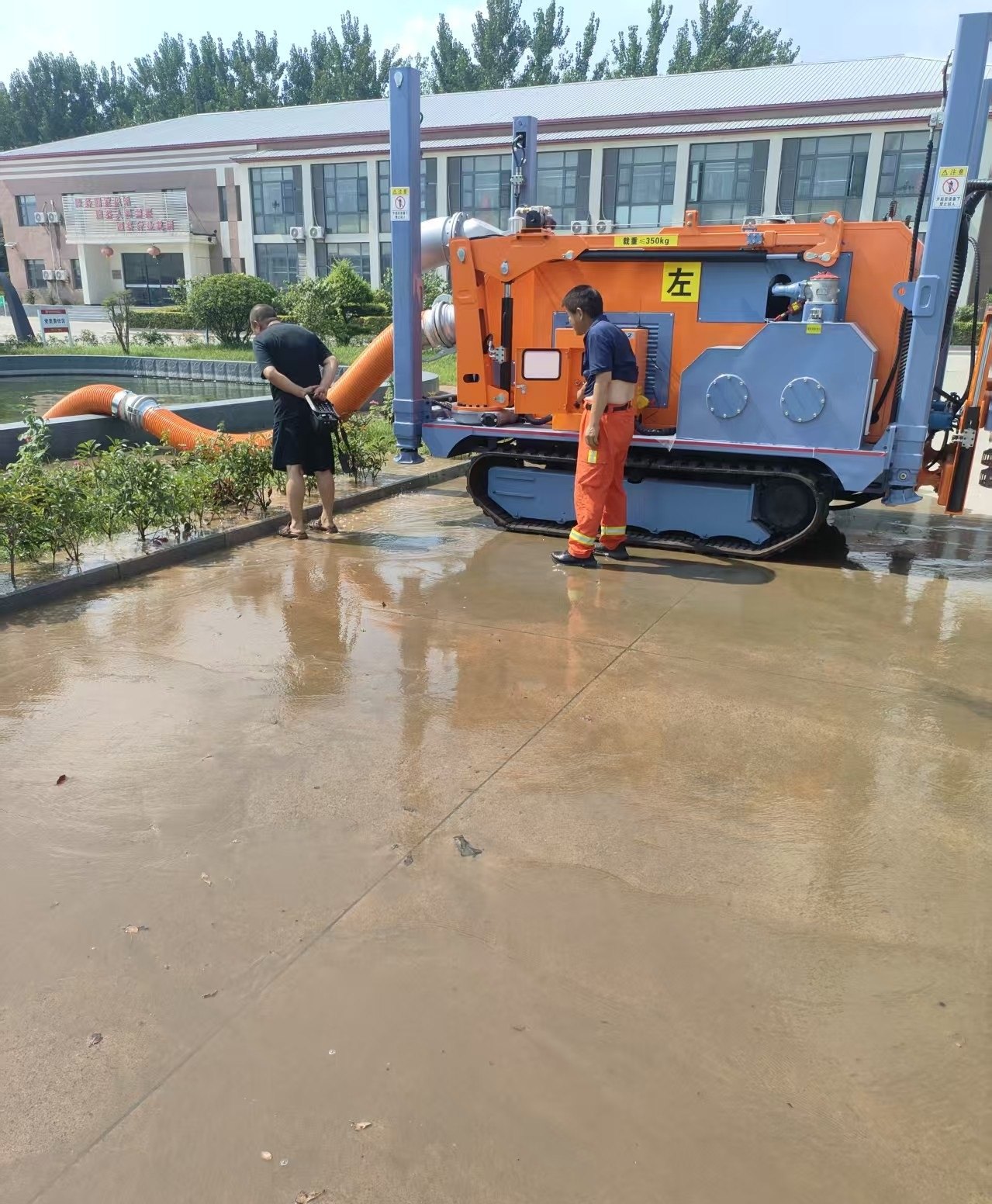
Tracked drainage unit set up beside a flooded area
Tracked unit positioned at the water's edge.
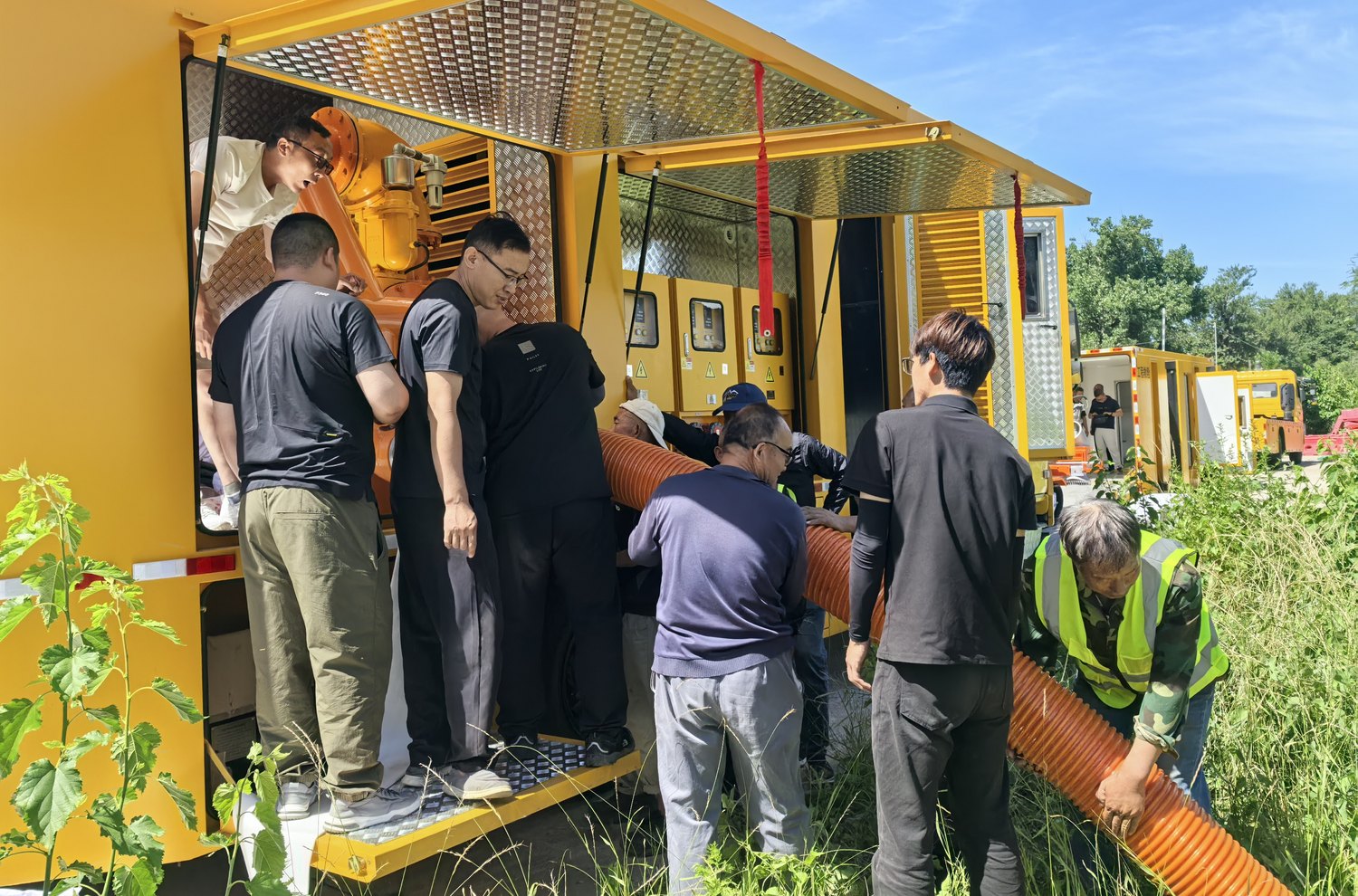
Discharge hose being loaded into a mobile pump truck on site
Loading the discharge line into the pump truck body.
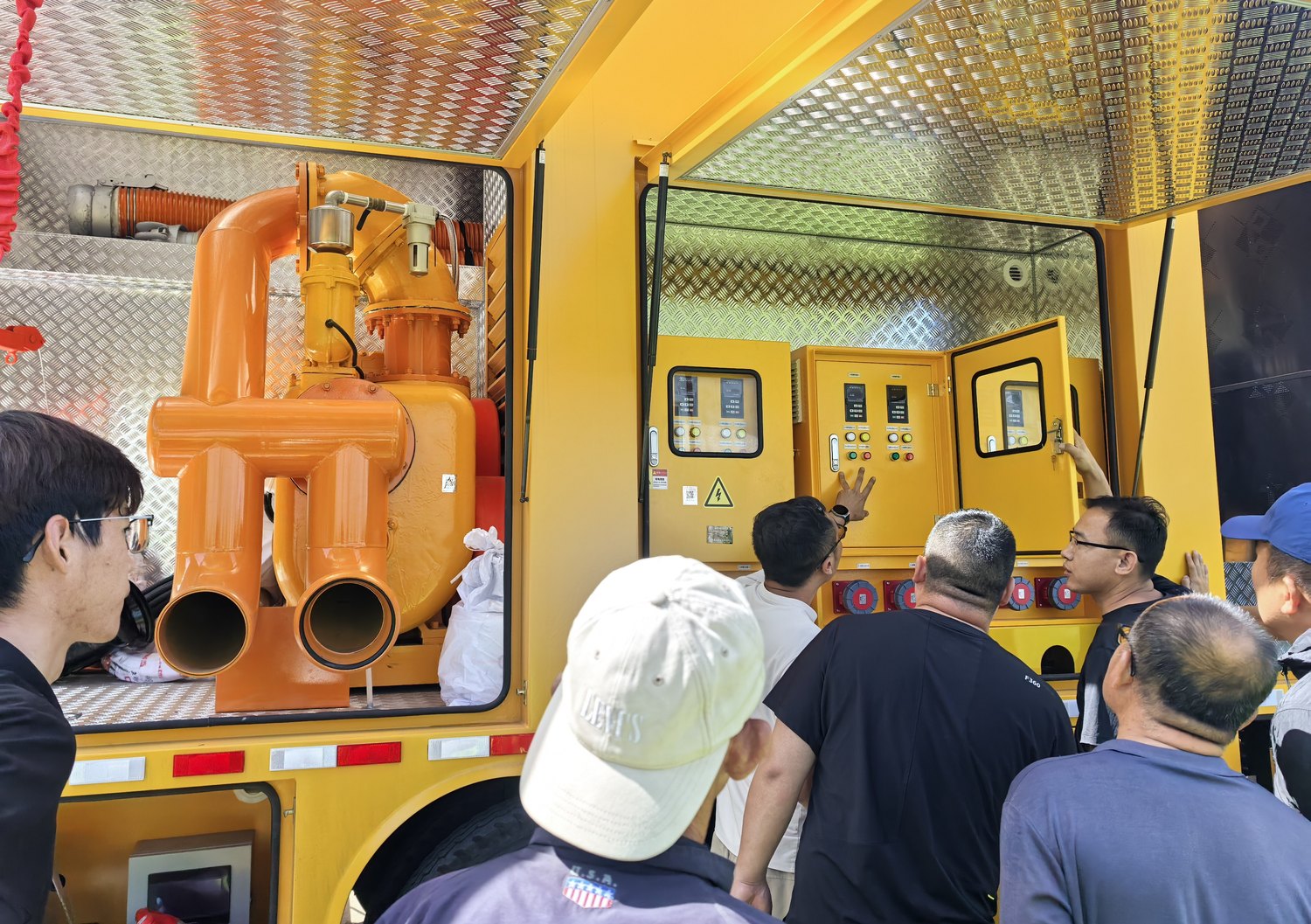
Self-priming pump set and control cabinets inside a mobile pump truck
Pump set and control cabinets inside the truck body.
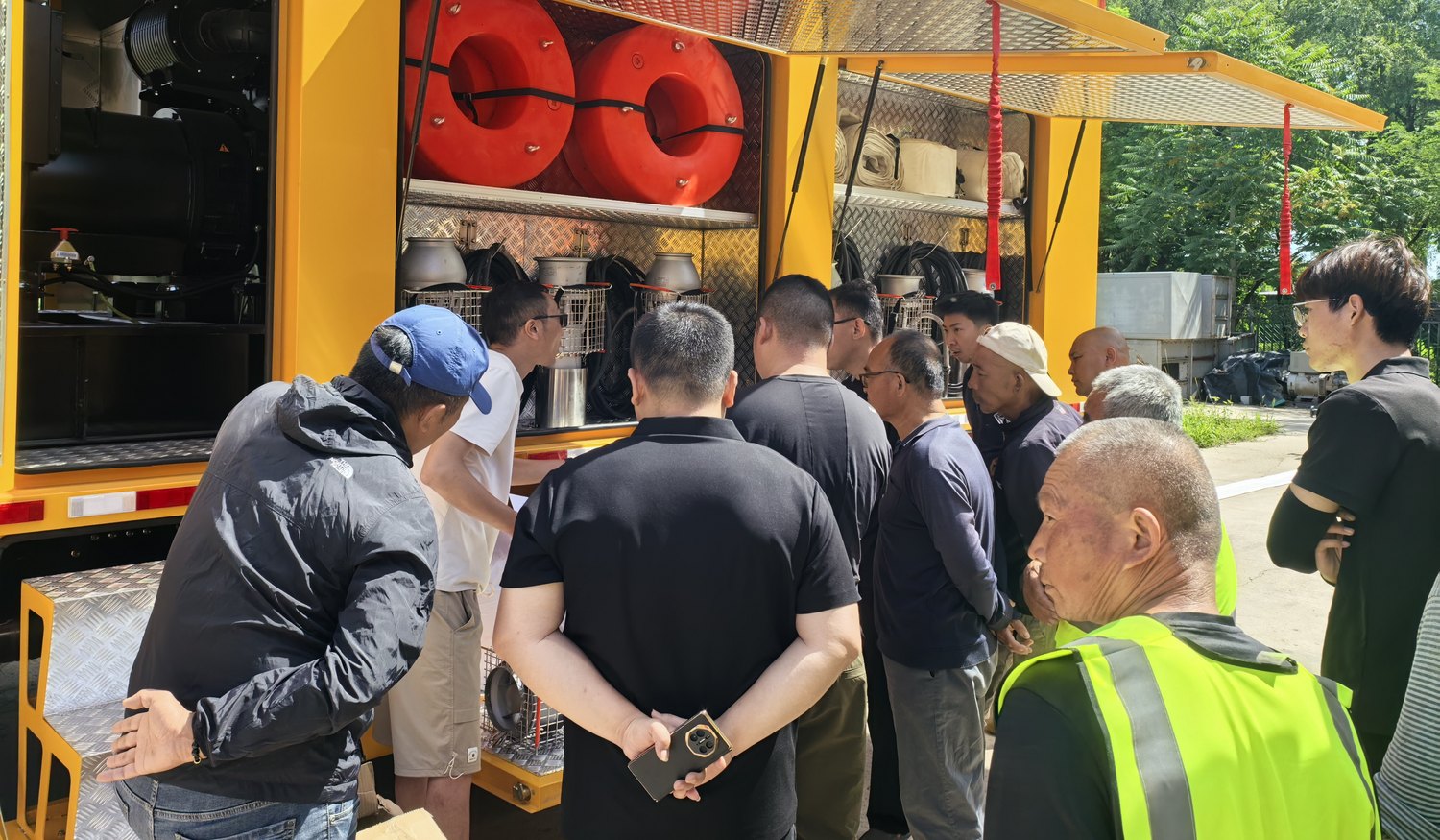
On-board equipment bay with floats, submersible pumps and hose
On-board equipment bay — floats, submersible sets, hose.
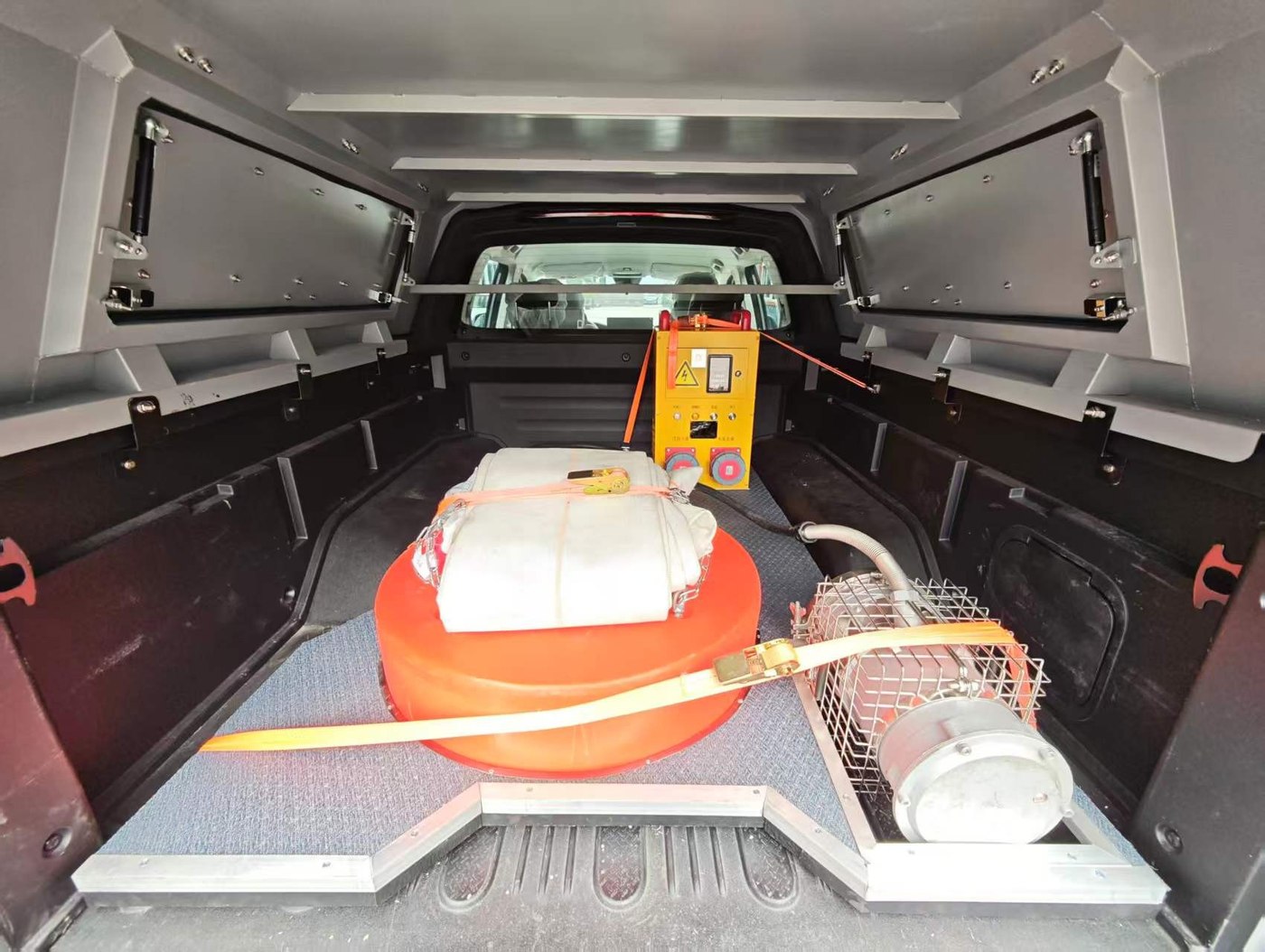
Pickup rescue truck bed fitted out with control cabinet, float, hose reel and submersible pump
Pickup body fitted out as a working bay — cabinet, float, hose and pump all strapped down.
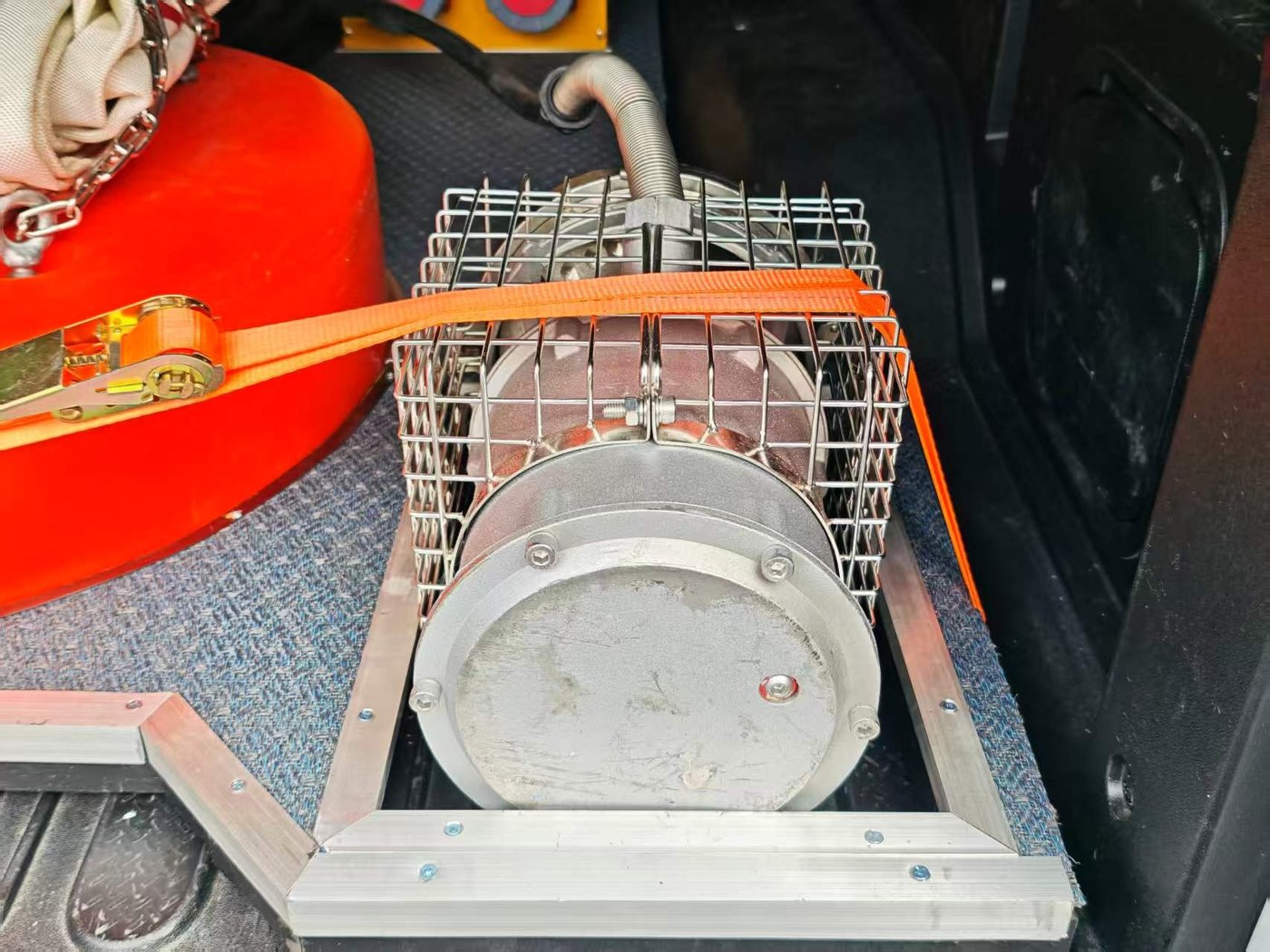
Stainless submersible pump in a protective mesh cage bolted to the truck bed rail
Submersible set in its mesh cage, bolted to the bed rail — travels ready, no separate crate.
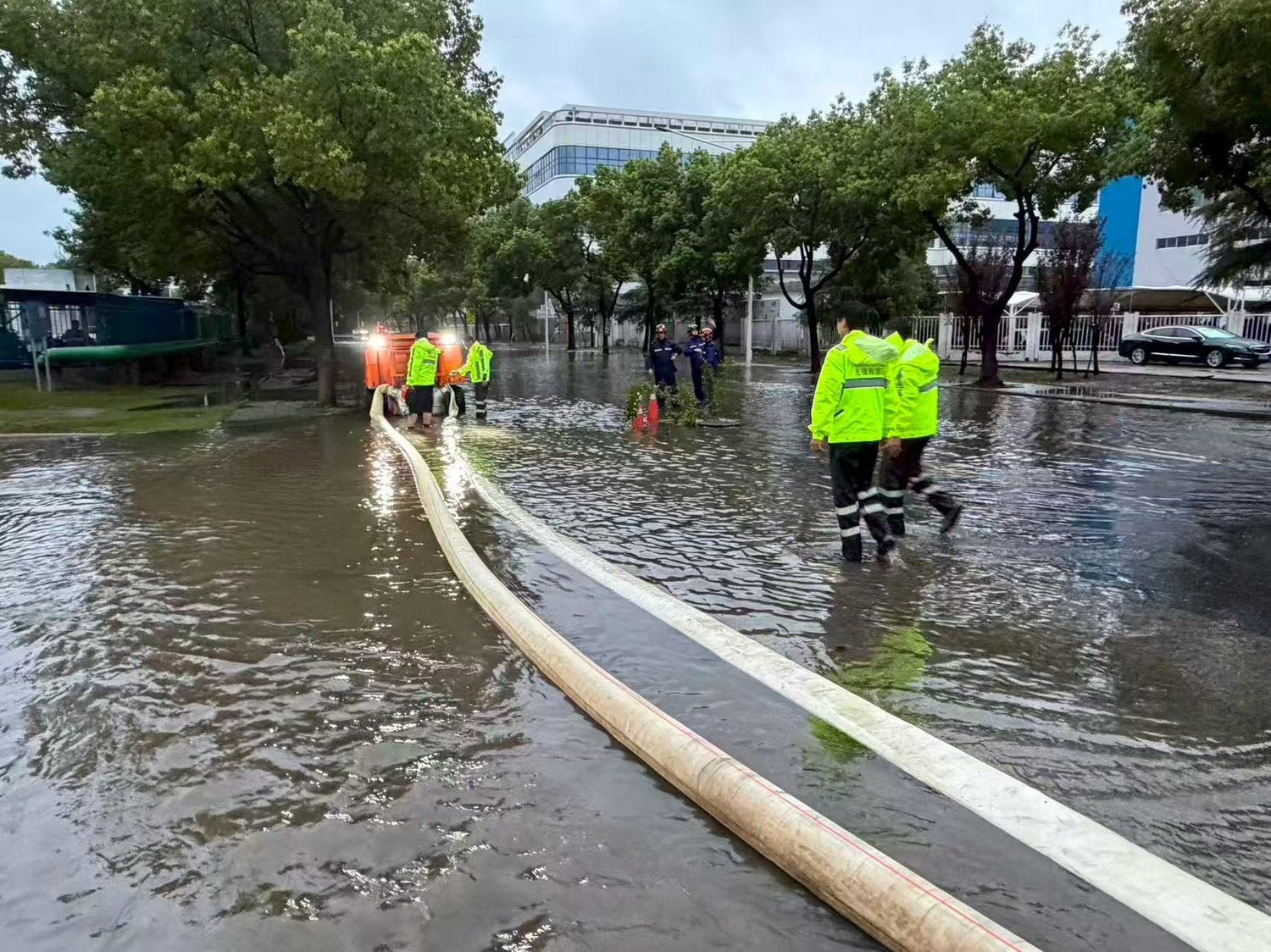
Amphibious drainage robot and discharge line across a flooded campus road
Industrial campus after heavy rain — twin discharge lines across the flooded road.
Equipment for this duty

Four lines that carry this work.

Tracked / amphibious

Drainage Robots

Self-propelled units that drive into the water and pump. Remote controlled, no operator in the flood.

  • Tracked and wheeled amphibious chassis
  • 1,000–4,000 m³/h class, single or twin pump
  • Hydraulic or onboard diesel power
Trailer mounted

Mobile Pump Stations

Self-priming pump station on a trailer. Tows behind a pickup and pumps without a permanent installation.

  • 1,000 m³/h class
  • Integrated power pack
  • Rapid connect discharge
Portable set

Portable PM Submersible

Permanent-magnet submersible pump with VFD cabinet, float and hose — carried by two people, running in minutes.

  • Permanent-magnet motor, VFD control
  • Supplied as a complete set
  • Fits through a standard manhole
High suction lift

Vacuum-Assisted Self-Priming

Primes from a dry line at high suction lift. For sites where the pump has to stand well above the water.

  • Vacuum-assisted priming, no foot valve
  • DN250 connections
  • Up to 76 mm solids
Sizing for flood response is usually about the drain-down time you need, not the maximum flow the pump can reach. Tell us the volume, the discharge point and the access route, and we will work back from there.
Next step

Send the site, get a configuration.